FAQs

Please read our FAQs page to find out more.

What is Heart Support designed to support?

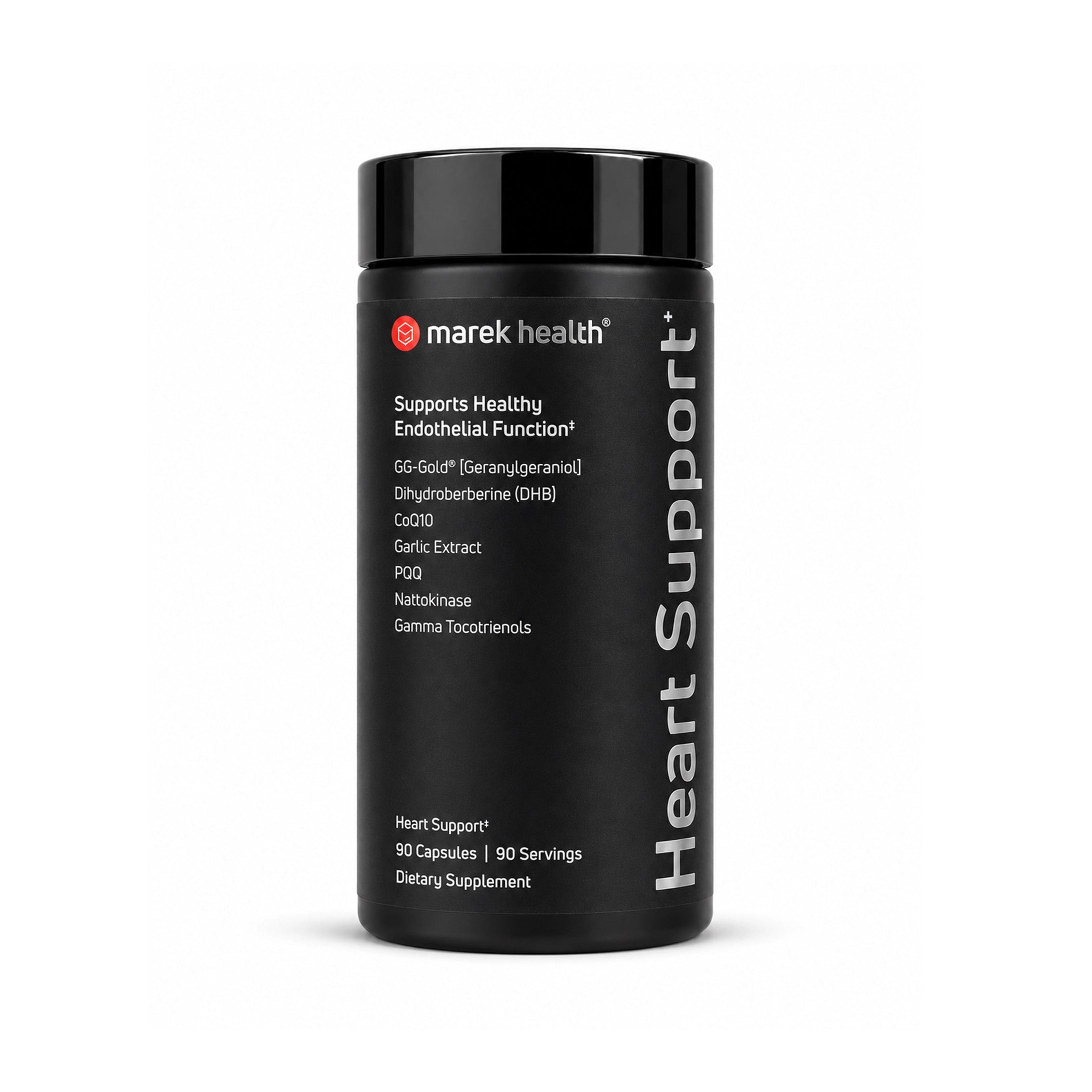
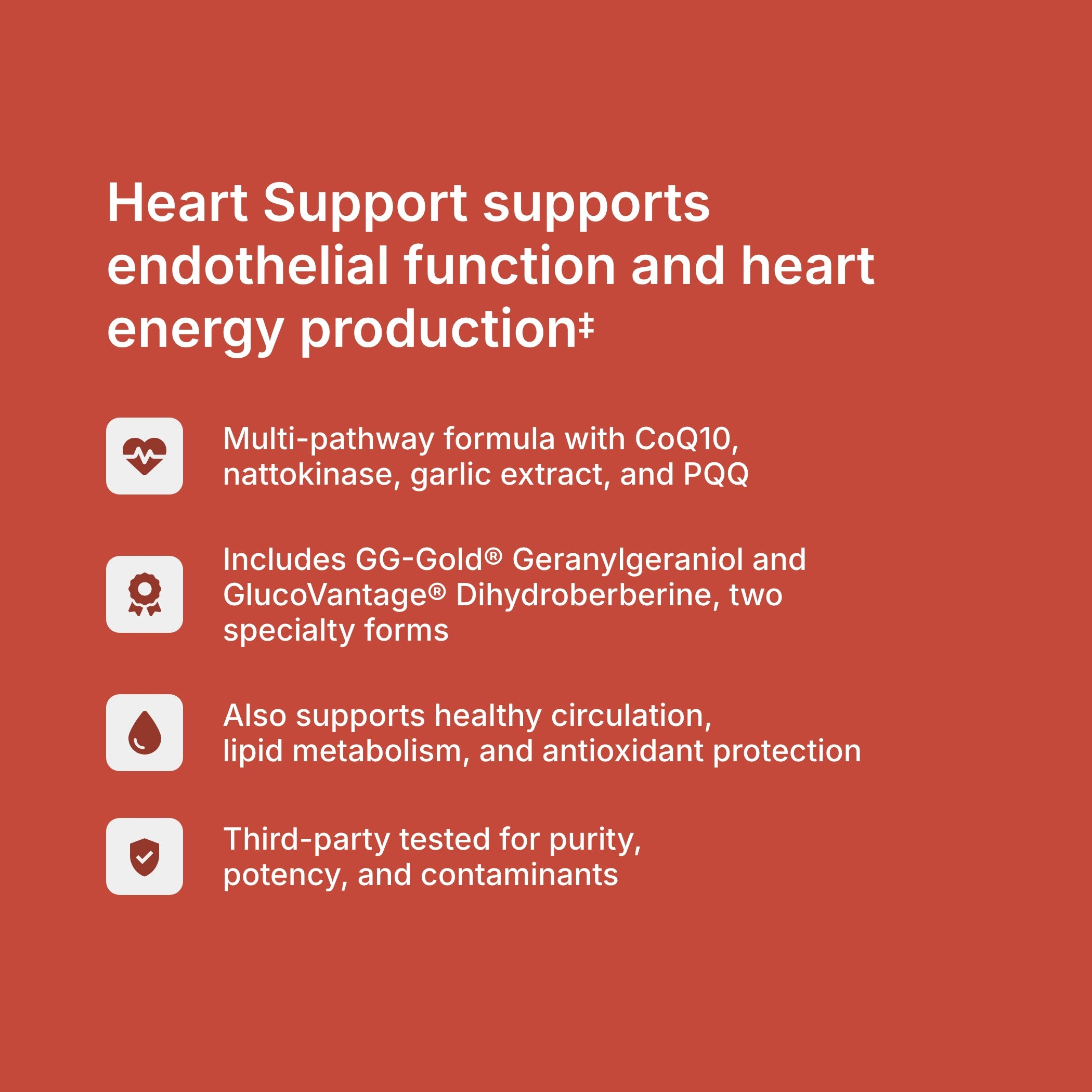
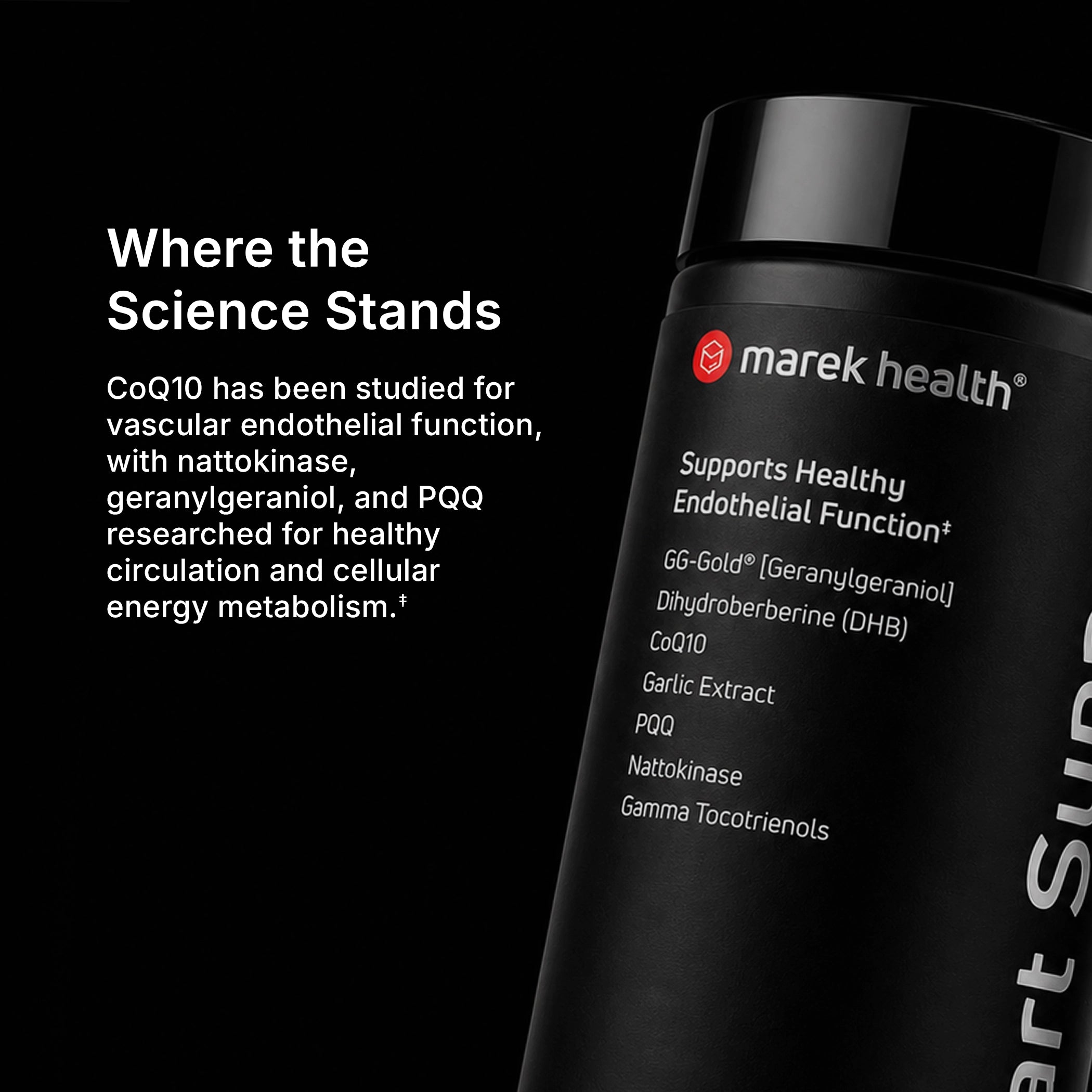
Heart Support is Marek's multi-pathway cardiovascular formula — seven ingredients chosen to support healthy endothelial function, heart energy production, healthy circulation, lipid metabolism, and antioxidant protection.‡

One capsule daily with food. Built for daily foundational cardiovascular support.‡

Is Heart Support a substitute for cardiovascular medications or "cardioprotective"?

No. Heart Support is a dietary supplement that provides nutrients and botanicals studied in cardiovascular research contexts. It is not a medication, it does not treat heart disease, and it is not a replacement for any prescribed cardiovascular therapy.‡

If you take prescription cardiovascular medications — statins, blood pressure medications, anticoagulants, antiplatelets, or anti-arrhythmics — do not stop them. Heart Support may be appropriate as an adjunct alongside medication for some people, but that decision is one to make with your healthcare provider.

Marketing language like "cardioprotective" sits in legally and clinically loaded territory. Heart Support is positioned for what it actually is: daily foundational support for the pathways and tissues involved in normal cardiovascular function in healthy adults.‡

What does CoQ10 do, and why is it in the formula?

Coenzyme Q10 (CoQ10) is a fat-soluble molecule produced by the body and concentrated in tissues with high energy demand, the heart in particular. It plays two roles that make it a centerpiece of cardiovascular nutrition research.‡

The first is mitochondrial. CoQ10 sits inside the electron transport chain, the cellular machinery that produces ATP. Heart muscle has more mitochondria per cell than almost any other tissue because it contracts continuously and never rests. Adequate CoQ10 status supports the heart's energy production capacity.‡

The second is endothelial. The endothelium, the single-cell-thick lining of all blood vessels, is metabolically demanding and produces signaling molecules (nitric oxide chief among them) that regulate vascular tone and function. CoQ10 has been studied for its effects on markers of endothelial function in randomized controlled trials, with recent systematic reviews showing supportive effects on flow-mediated dilation, a measure of endothelial health.‡

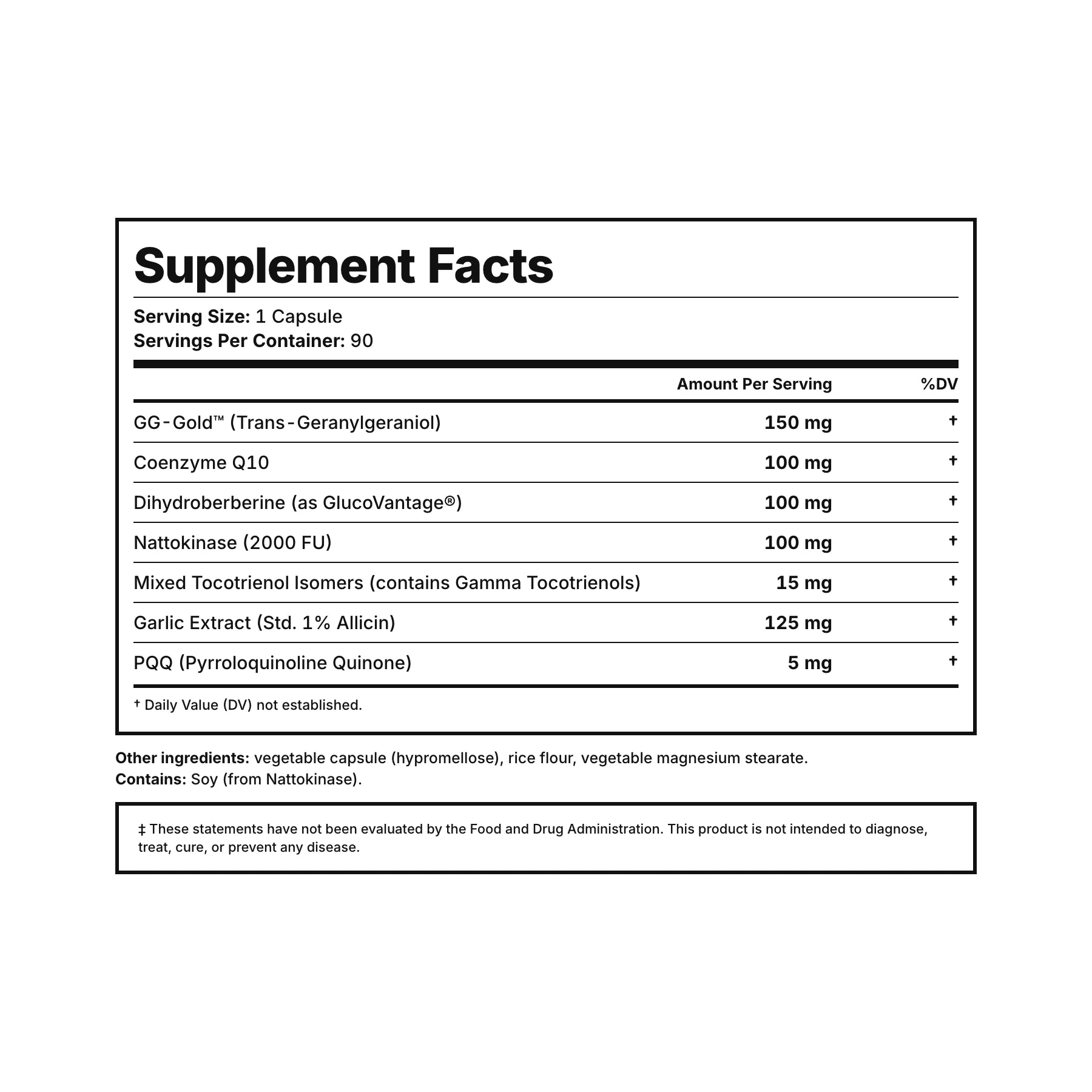
CoQ10 production naturally declines with age, and dietary intake provides only modest amounts. The Heart Support formula provides 100 mg of CoQ10 per capsule — a dose used in much of the relevant cardiovascular research.‡

References:

What is geranylgeraniol (GG), and why is it in the formula?

Geranylgeraniol — usually shortened to GG — is a 20-carbon molecule produced by the body as part of the mevalonate pathway, the same biosynthetic pathway that produces cholesterol, CoQ10, and several other cardiovascular-relevant molecules.‡

GG sits at a branch point in that pathway. It serves as a substrate for the synthesis of CoQ10 and for the post-translational modification ("prenylation") of certain proteins involved in cellular signaling. Without adequate GG, the downstream products of the mevalonate pathway can become limited.‡

Heart Support provides 150 mg of GG as GG-Gold®, a patented annatto-derived geranylgeraniol ingredient used in most of the recent human research on GG supplementation.

Reference: Geranylgeraniol review — https://pmc.ncbi.nlm.nih.gov/articles/PMC10691100/

What does nattokinase do?

Nattokinase is a serine protease enzyme produced during the fermentation of soybeans by Bacillus subtilis natto — the same fermentation that produces the traditional Japanese food natto. It is notable in cardiovascular research for its fibrinolytic activity: in laboratory and human studies, nattokinase has been shown to support the breakdown of fibrin, the protein matrix that forms during normal blood clotting.‡

Healthy circulation depends on a continuous balance between coagulation (forming clots when needed) and fibrinolysis (breaking down clots once they've served their purpose). Nattokinase has been studied in the context of supporting that fibrinolytic side of the equation, with research literature exploring its role in supporting healthy circulation.‡

Heart Support provides 100 mg of nattokinase standardized to 2,000 FU (fibrinolytic units) per capsule.

Important safety note: because of nattokinase's effect on the fibrinolytic system, this ingredient is the single most important reason to talk to your healthcare provider before adding Heart Support to a routine that includes any blood-thinning or antiplatelet medication. See the medication-interactions FAQ below.

Reference: Nattokinase and circulation pathways — https://pmc.ncbi.nlm.nih.gov/articles/PMC6043915/

What roles do garlic, dihydroberberine, PQQ, and mixed tocotrienols play?

Four ingredients that round out the formula beyond the core (CoQ10, GG–Gold®, nattokinase), each chosen for distinct cardiovascular-relevant pathways.

  • Garlic extract (standardized to 1% allicin). Garlic is one of the most-studied culinary botanicals in cardiovascular nutrition research, with a substantial body of randomized trial data on its role in supporting healthy lipid metabolism, blood pressure within the normal range, and vascular function. Heart Support uses a standardized garlic extract — the form used in most of the relevant clinical research.‡
  • Dihydroberberine (as GlucoVantage®). The same DHB used in Marek Berberine⁵. However, in Heart Support, the emphasis isn't supporting healthy glucose metabolism; the research literature on berberine also includes effects on markers of lipid metabolism. DHB is the bioavailable form that delivers comparable exposure to standard berberine HCl at roughly 1/5th the dose, with substantially better GI tolerability.‡ If you also take Berberine⁵, see the stacking FAQ below.
  • PQQ (pyrroloquinoline quinone). PQQ is a small redox-active molecule studied for its role in mitochondrial biogenesis — the cellular process of producing new mitochondria. Heart tissue depends heavily on mitochondrial function for its energy demands, which is why PQQ appears in cardiovascular formulas alongside CoQ10. Human research has shown that PQQ supplementation affects markers related to mitochondrial biogenesis and cellular energy metabolism.‡
  • Mixed tocotrienols (containing gamma tocotrienols). Tocotrienols are a structurally distinct sub-family of the vitamin E family — different from the alpha-tocopherol that appears in most vitamins. They have their own research literature in antioxidant defense, cardiovascular pathway support, and cellular signaling.‡

References:

When and how should I take Heart Support?

Take one capsule daily with food, preferably a meal that contains some dietary fat.‡

The "with food" part covers two things. First, CoQ10 and the mixed tocotrienols are fat-soluble, so taking Heart Support with a meal that contains some fat improves absorption. Second, GI tolerance: some people find herbal extracts more comfortable with food.

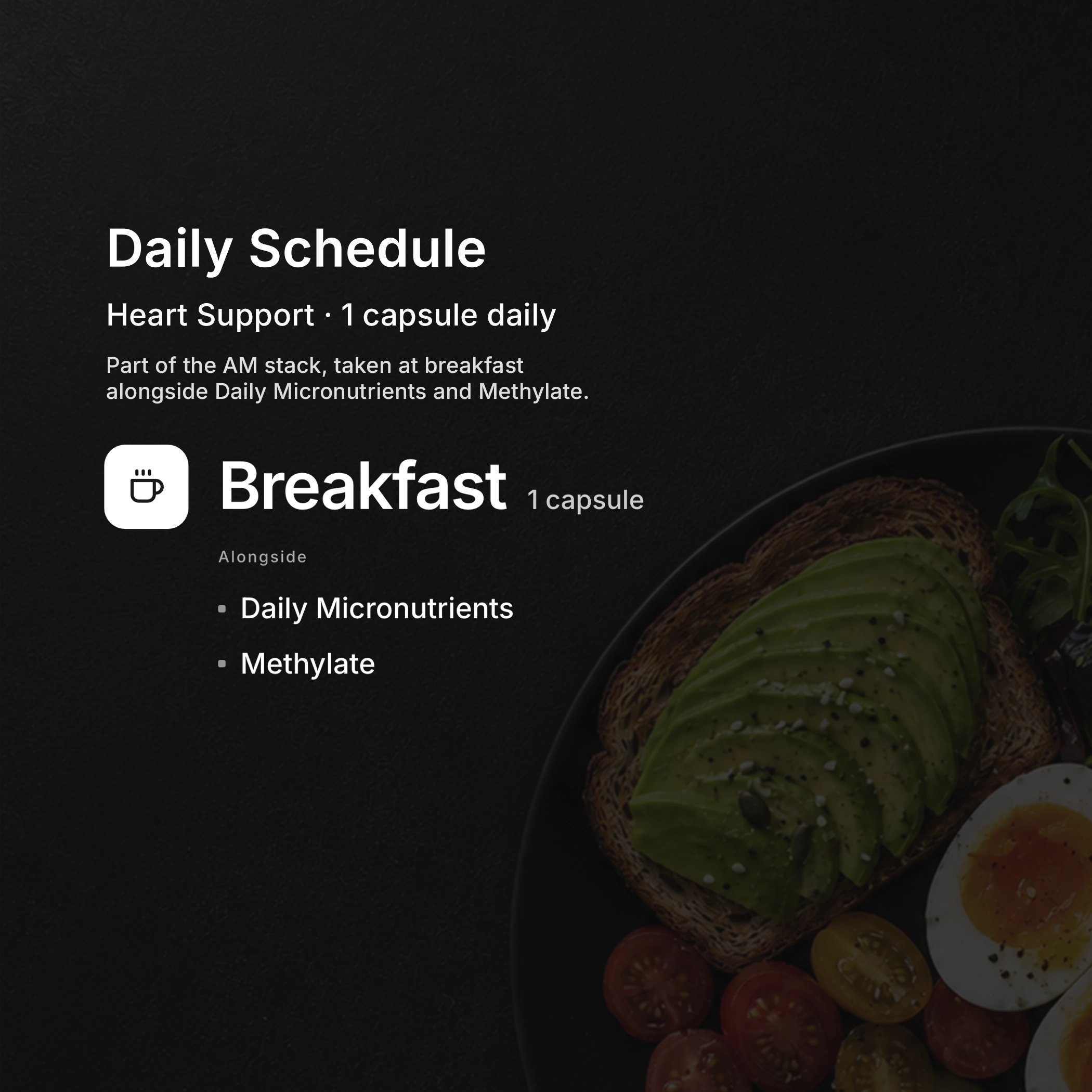
Timing within the day is flexible. Most people take Heart Support with lunch or dinner. If you also take Berberine⁵, an easy approach is to put Heart Support at dinner and Berberine⁵ doses with breakfast and lunch.

Daily consistency is the protocol. Cardiovascular pathway support is foundational and operates at the level of nutrient status and pathway availability over weeks to months — not as an acute single-dose effect.‡

Can I take Heart Support if I'm on blood thinners, statins, or blood pressure medication?

This is a critical conversation to have with your prescribing provider before adding Heart Support — and depending on the medication, the answer may be that Heart Support isn't appropriate.

Blood thinners and antiplatelet medications (warfarin/Coumadin, apixaban/Eliquis, rivaroxaban/Xarelto, dabigatran/Pradaxa, clopidogrel/Plavix, prasugrel/Effient, aspirin therapy, others). This is the single most important medication category to flag. Heart Support contains nattokinase (a fibrinolytic enzyme) and garlic extract (which has antiplatelet effects in the research literature). Both can amplify the effects of blood-thinning medications and increase bleeding risk. Do not add Heart Support to a regimen that includes any anticoagulant or antiplatelet medication without explicit guidance from your prescribing provider.

Statins and other cholesterol medications (atorvastatin/Lipitor, simvastatin/Zocor, rosuvastatin/Crestor, pravastatin, ezetimibe, PCSK9 inhibitors). Heart Support's CoQ10 and geranylgeraniol both relate to the mevalonate pathway that statins affect. This is not the same thing as saying Heart Support treats statin side effects — it doesn't — but the biological relevance is direct enough that your provider should weigh in. Berberine and garlic have also been studied for effects on lipid metabolism; combining them with statins is a clinical decision to be made with your prescribing provider.

Blood pressure medications (any class: ACE inhibitors, ARBs, beta-blockers, calcium channel blockers, diuretics). Garlic and CoQ10 have been associated with effects on blood pressure within the normal range in some research. Adding either to a regimen that already controls blood pressure pharmacologically could affect dosing. Discuss with your prescribing provider.

Glucose-lowering medications (insulin, metformin, sulfonylureas, GLP-1 agonists like Ozempic, Wegovy, Mounjaro, Zepbound, SGLT2 inhibitors). Heart Support contains dihydroberberine, which can affect glucose handling. Combining with prescription glucose-lowering medications may increase the risk of hypoglycemia.

Other cardiovascular medications (anti-arrhythmics and others not listed above). Talk to your prescribing provider; interactions vary, and the right answer depends on your specific medication, condition, and clinical picture.

Who should consult a healthcare provider before taking Heart Support?

Talk to your healthcare provider before starting Heart Support if you:

  • Take any blood-thinning or antiplatelet medication — warfarin, apixaban (Eliquis), rivaroxaban (Xarelto), dabigatran (Pradaxa), clopidogrel (Plavix), aspirin therapy, or others. Nattokinase and garlic can increase bleeding risk.
  • Take statins or other cholesterol-lowering medications.
  • Take blood pressure medications of any class.
  • Take any glucose-lowering medication — insulin, metformin, sulfonylureas, GLP-1 agonists, SGLT2 inhibitors.
  • Have a diagnosed cardiovascular condition (heart disease, peripheral vascular disease, atrial fibrillation, history of stroke or DVT, hypertension under treatment, or related conditions).
  • Have a bleeding disorder, are scheduled for surgery within the next two weeks, or have recently had surgery.
  • Have liver or kidney disease.
  • Have a soy allergy or sensitivity. Heart Support contains soy.
  • Are pregnant, nursing, or trying to conceive.
  • Are under 18.

Heart Support is a dietary supplement and is not intended to diagnose, treat, cure, or prevent any disease, including any cardiovascular condition. If you're managing a condition or under medical supervision, work with your provider to determine whether Heart Support fits your protocol.

How long does shipping take?

We ship fast — orders go out within 1 business day. From there:

  • Standard (3–7 business days): Free on orders over $99 within contiguous U.S.
  • Expedited (2–3 business days): Available at checkout within contiguous U.S.
  • Canada (7 business days): Flat shipping to Canada with duties included.

You'll receive tracking info by email as soon as your order ships.

Do you ship internationally?

We currently ship to the U.S. and Canada only.
More destinations are coming — sign up for our newsletter at the bottom of any page and we'll let you know when they're available.

Are your supplements third-party tested?

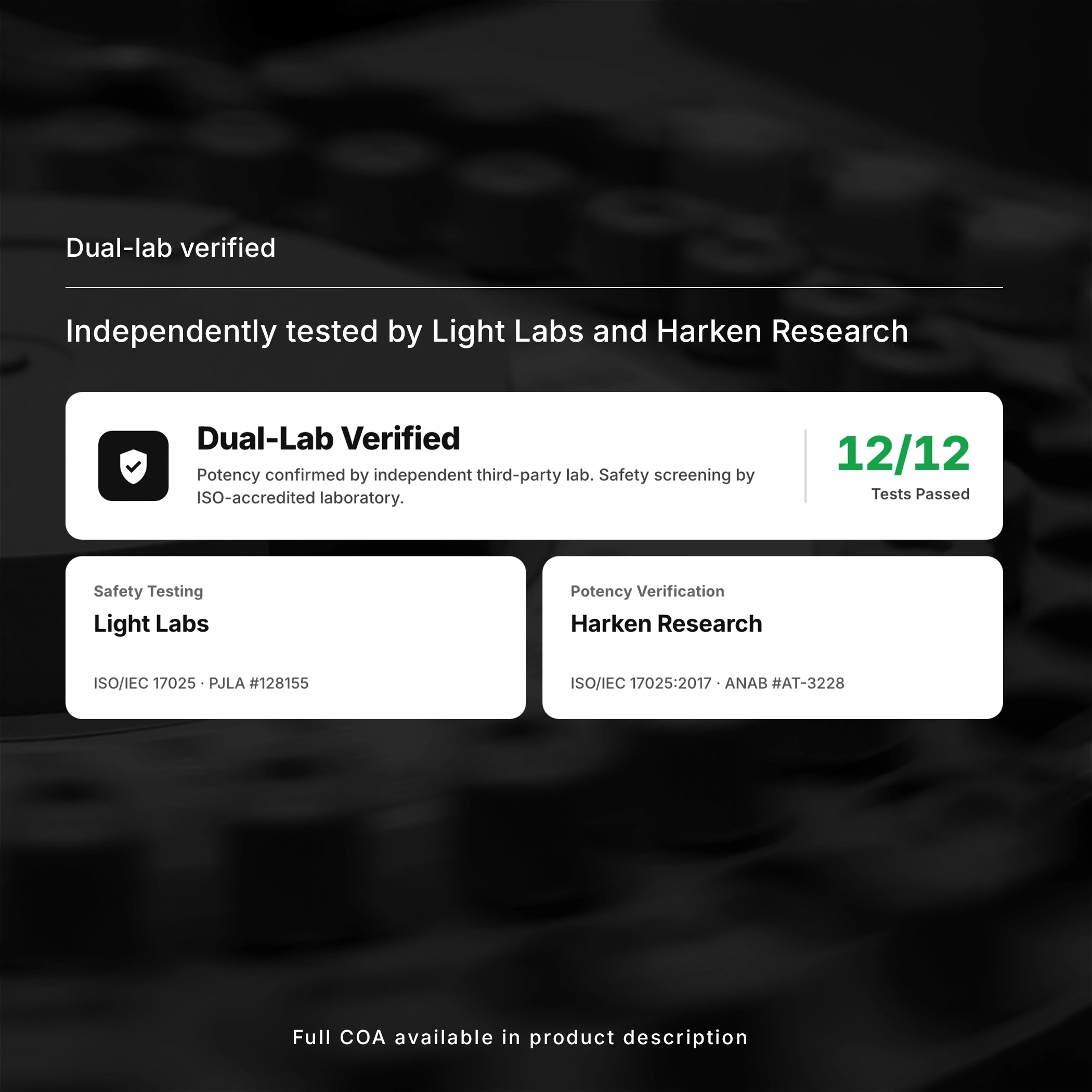
Every single batch of Marek Supplements is manufactured in a cGMP-compliant, NSF/ANSI 455-2 certified U.S. facility, with globally sourced ingredients tested by two ISO-accredited laboratories for identity, potency, heavy metals, microbial contaminants, and allergens. Because what's on the label should be what's in the bottle — and nothing else.

Do you offer subscriptions?

Absolutely. Choose Subscribe & Save at checkout and we'll ship every 90 days — you'll save 10% on every order, and you can pause, skip, or cancel whenever you like.

Are your supplements non-GMO and gluten-free?

Yes. All Marek Supplements are non-GMO and gluten-free (verified by third-party lab testing), with no artificial dyes or preservatives.

Didn’t find your answer?

Don't hesitate to contact us

MAREK SUPPLEMENTS

Daily schedule

Capsule Powder

Morning

Before eating

FASTED

Glutamine

$30/90-days

5g in water

Breakfast

With food containing fat

WITH MEAL

Methylate

$70/90-days

2 capsules

Thyroid Support

$75/90-days

1 capsule

P5P+

$70/90-days

1 capsule

Daily D3/K2

$50/90-days

1 capsule

Berberine5 (dose 1/2)

$75/90-days

1 capsule · with carbs

Lunch

Midday, with food

WITH MEAL

Liver Support

$125/90-days

2 capsules

Berberine5 (dose 2/2)

$75/90-days

1 capsule · with carbs

Dinner

Evening, with food

WITH MEAL

Multivitamin

$75/90-days

1 capsule

Heart Support

$100/90-days

1 capsule · away from Berberine5

Anytime

Flexible timing

FLEXIBLE

Calm

$75/90-days

1 capsule · non-sedating, day or night

Creatine

$30/90-days

5g in water · consistency > timing

Before Bed

30-60 min before sleep

WIND DOWN

Mag2+ Boron

$70/90-days

4 capsules

Glycine

$30/90-days

5g in water or chamomile tea

Berberine5: Take each capsule with your two largest carb-containing meals of the day.
Heart Support: Take at a separate meal from Berberine5 — dinner keeps it clear of both doses.

These statements have not been evaluated by the Food and Drug Administration. Dosing guidance is educational only and not a substitute for medical advice. Consult your healthcare provider before starting any new protocol.