
FAQs

Please read our FAQs page to find out more.

What is Calm designed to support?

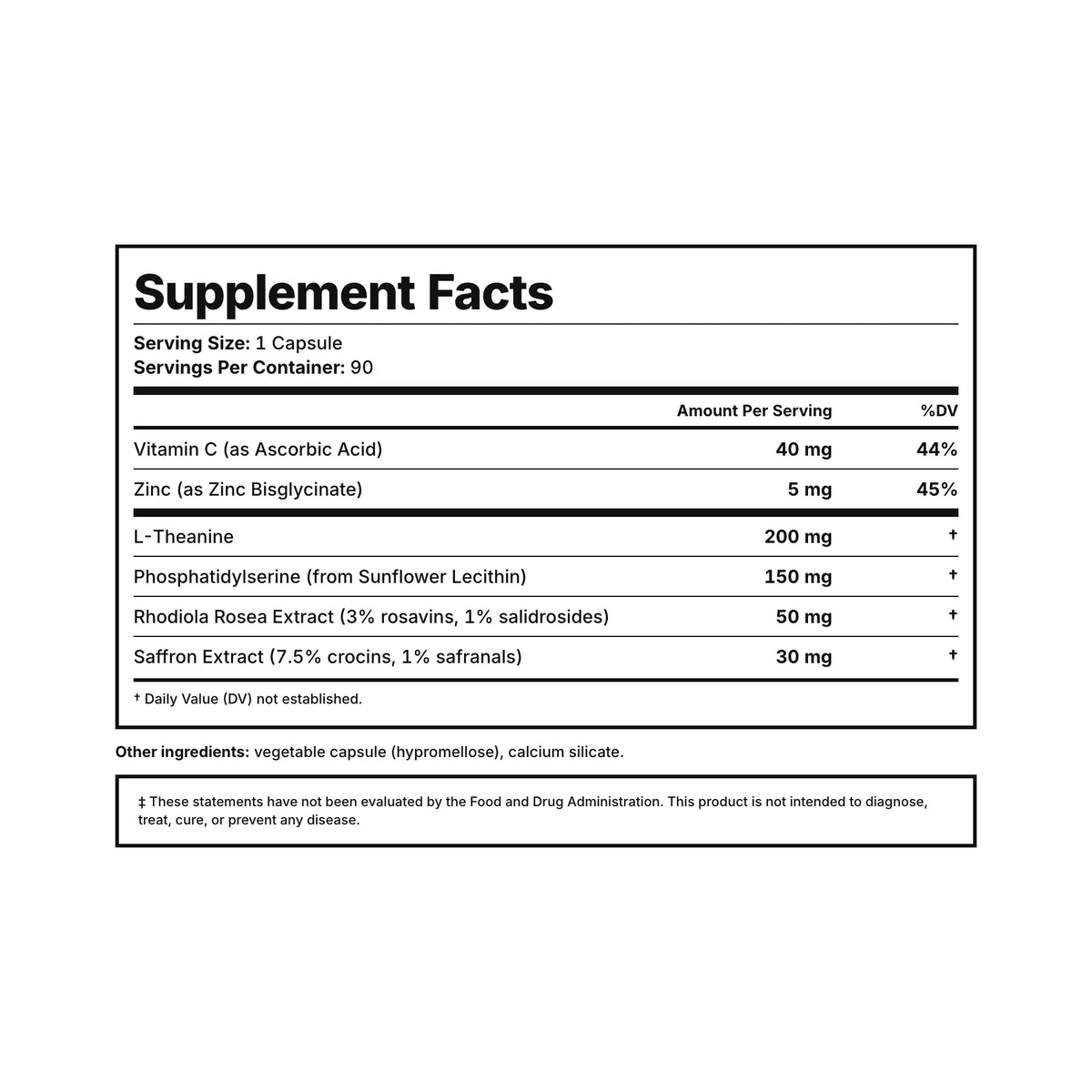
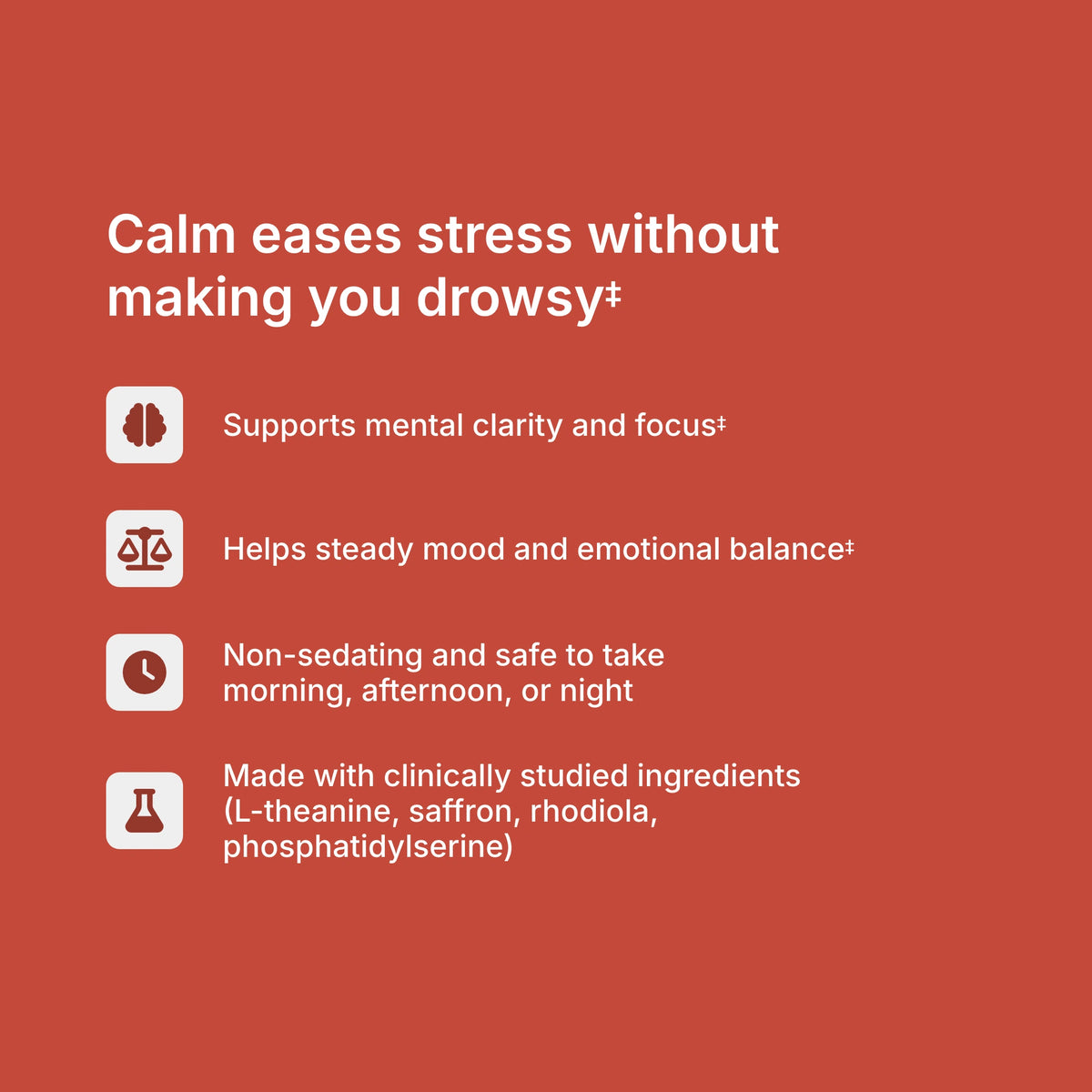
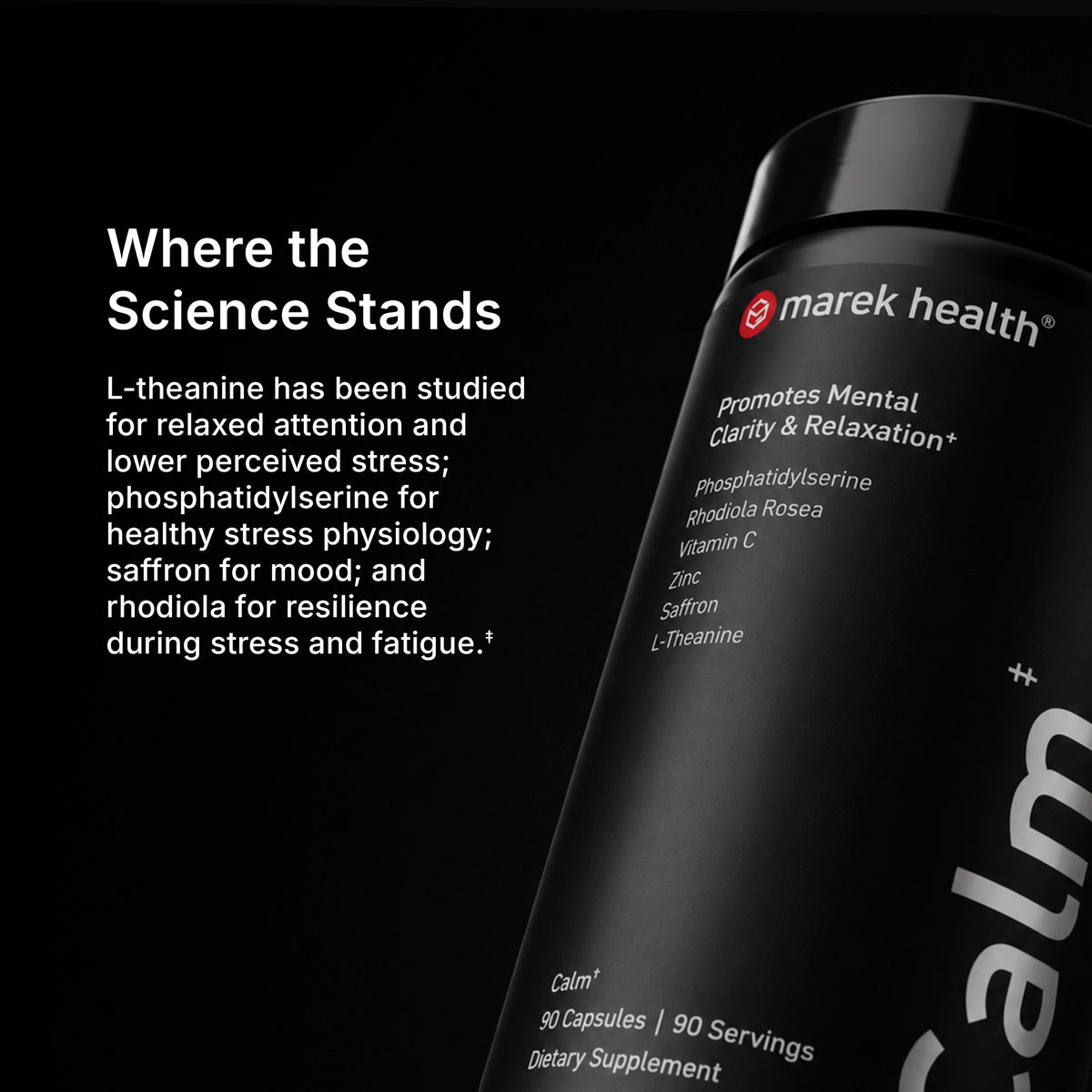
Calm is a six-ingredient capsule formula built for relaxation without sedation. It supports a calm, focused mental state, healthy stress response, mood and emotional well-being — usable morning, afternoon, or evening.‡

The formula stacks ingredients that work through complementary pathways:‡

  • L-theanine (200 mg) — an amino acid that supports relaxed attention by modulating brain wave activity and neurotransmitter balance.‡
  • Phosphatidylserine (150 mg, from sunflower lecithin) — a phospholipid that supports healthy cortisol response to stress.‡
  • Saffron extract (30 mg, standardized to 7% crocins, 1% safranals) — supports mood and emotional well-being.‡
  • Rhodiola extract (50 mg, standardized to 3% rosavins, 1% salidrosides) — supports stress resilience and recovery from mental fatigue.‡
  • Vitamin C (40 mg) and zinc (5 mg as bisglycinate) — nutrients with roles in adrenal function, neurotransmitter synthesis, and the body's response to stress.‡

No melatonin, no caffeine, no sedatives.

How is Calm different from a sedative or sleep aid?

Most sleep aids push you toward unconsciousness. Calm doesn't.‡

The active ingredients work upstream of the wake-sleep switch — supporting the systems that govern stress response, mood regulation, and attention — rather than pharmacologically pushing the brain into sleep.‡

The practical difference: you can take Calm in the middle of a workday without losing focus or feeling drowsy. The subjective state most people describe is "the noise gets quieter," not "I'm getting sleepy."

If you specifically need help falling asleep, that's a different problem and probably a different product — talk to your healthcare provider.

How does L-theanine support relaxation?

L-theanine is an amino acid found naturally in green tea and a handful of mushrooms. It's been one of the most studied "calm without sedation" compounds in the literature for the past two decades.‡

The mechanism story has a few threads:

  • L-theanine appears to increase alpha brain wave activity. Alpha waves predominate in states of relaxed alertness — eyes-open meditation, the moment before something clicks into focus. Beta waves predominate during anxiety and intense problem-solving.‡
  • It modulates several neurotransmitter systems linked to mood and arousal, including supporting GABAergic tone (the brain's primary inhibitory neurotransmitter) without binding directly to GABA receptors the way benzodiazepines or alcohol do.‡
  • Human trials of daily L-theanine supplementation have shown reductions in perceived stress and improvements in attention and reaction time during cognitively demanding tasks.‡

Calm provides 200 mg of L-theanine per capsule — the dose used in most of the relevant human trials.

References:

What role does phosphatidylserine play in Calm?

Phosphatidylserine (PS) is a phospholipid — a fat-like molecule that sits in cell membranes, including the membranes of neurons. It plays a role in how cells communicate at their surfaces and is concentrated in the brain.‡

For Calm's purposes, the relevant story is the stress one. Human studies have shown that PS supplementation can blunt the cortisol response to stressors — most notably exercise-induced stress, where daily PS reduced the post-stress cortisol spike compared to placebo. The mechanism appears to involve PS's role in HPA-axis regulation (the hypothalamic-pituitary-adrenal feedback loop that controls cortisol release).‡

Calm provides 150 mg of PS per capsule, derived from sunflower lecithin — soy-free, vegan, non-GMO. The dose is positioned as foundational daily support rather than acute high-dose stress mitigation.

Reference: Starks et al., J Int Soc Sports Nutr, 2008 — https://pmc.ncbi.nlm.nih.gov/articles/PMC2503954/

Why does Calm include saffron and rhodiola?

Two botanicals, two different but complementary roles in the formula.

Saffron (Crocus sativus) — historically precious, surprisingly well-studied. Calm uses 30 mg of standardized saffron extract (7% crocins, 1% safranals — the two compound families most associated with the bioactivity). Recent human trials have shown that standardized saffron extracts support mood, emotional well-being, and stress-response outcomes in healthy adults, with effects emerging over weeks of daily use.‡

Rhodiola (Rhodiola rosea) — a classical adaptogen, used for centuries in Russian and Scandinavian traditional medicine. Calm uses 50 mg of standardized extract (3% rosavins, 1% salidrosides). The adaptogen framing means rhodiola is studied for its effects on stress resilience, mental fatigue, and recovery from high cognitive or physical demand. A 2022 review of the clinical evidence concluded rhodiola preparations support stress-symptom outcomes across multiple study contexts.‡

The two work better together than either alone for Calm's positioning.‡

References:

When and how should I take Calm?

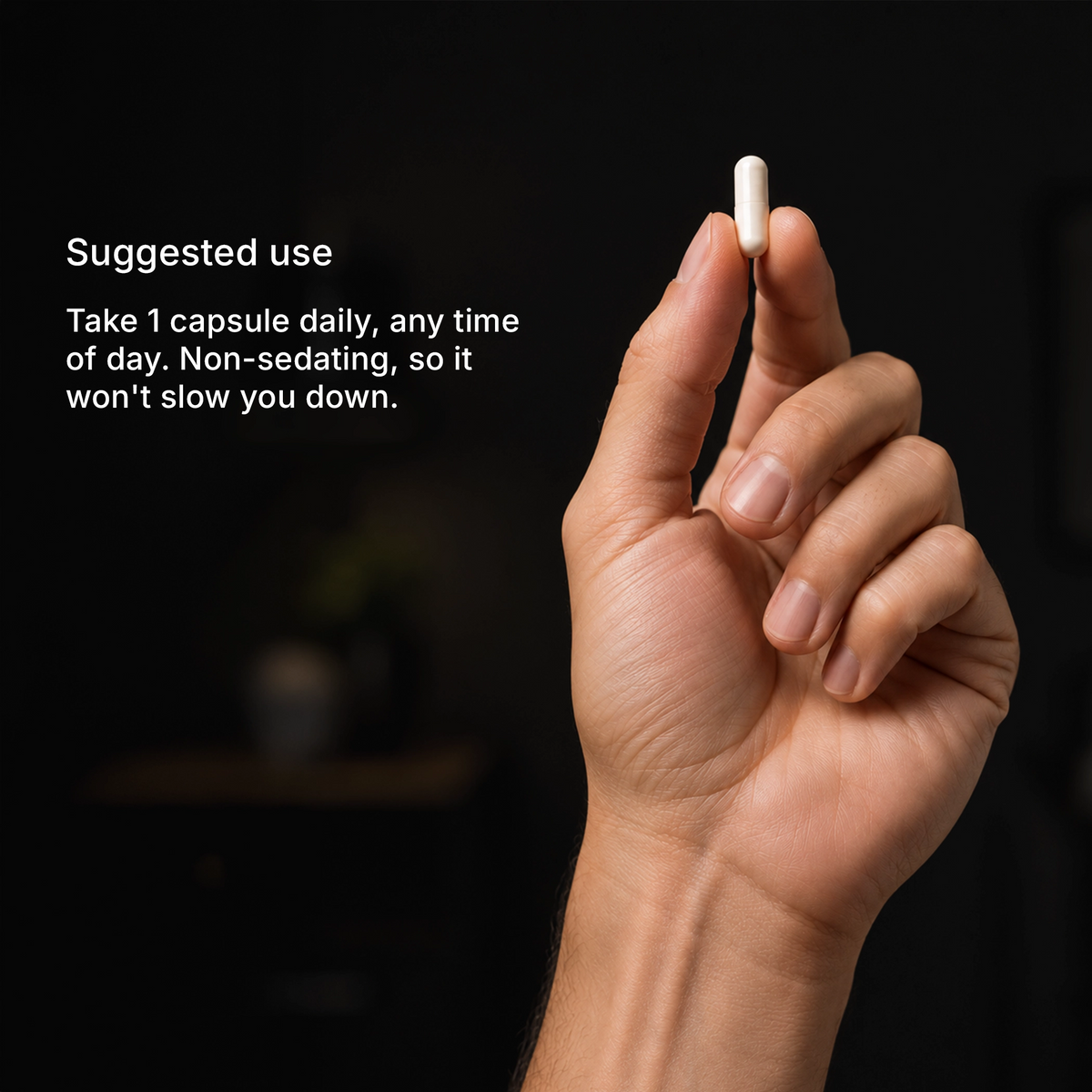
One capsule daily. Timing is flexible — that's part of the design.‡

Most people land on one of three patterns:

  • Morning, with breakfast — for support through a high-demand workday.
  • Mid-afternoon — for the 2-to-4 p.m. energy dip when stress tolerance often runs thin.
  • Evening, 1–2 hours before bed — for a wind-down routine, though Calm isn't a sleep aid.

Calm can be taken with or without food. Some people find the L-theanine effect feels slightly stronger on a relatively empty stomach; others find taking it with a meal smooths the experience. Try both, pick whichever you'll do consistently.

If you take only one capsule per day and want to know when it'll matter most, take it about 30–60 minutes before the part of your day you most want support for.

Can I take Calm with caffeine?

Yes. The L-theanine plus caffeine pairing is one of the more interesting combinations in the cognitive nutrition literature.‡

Caffeine acts on adenosine receptors to delay perceived fatigue and increase arousal. The downsides at higher doses are familiar: jitteriness, anxiety, post-peak crash, sleep disruption. L-theanine appears to smooth several of those edges. Combined human studies of L-theanine and caffeine (typical doses: 100–200 mg of each) have shown improvements in sustained attention, accuracy on demanding tasks, and reductions in caffeine-related anxiety compared to caffeine alone.‡

In practice, this means Calm can pair cleanly with morning coffee, espresso, or matcha. If you're sensitive to caffeine, the L-theanine in Calm may take some of the edge off without blunting the focus benefit.‡

If you don't drink caffeine, you don't need to start. L-theanine has documented effects on its own.

Can I take Calm alongside other Marek supplements?

Yes. Calm is designed for flexible placement in the daily protocol.

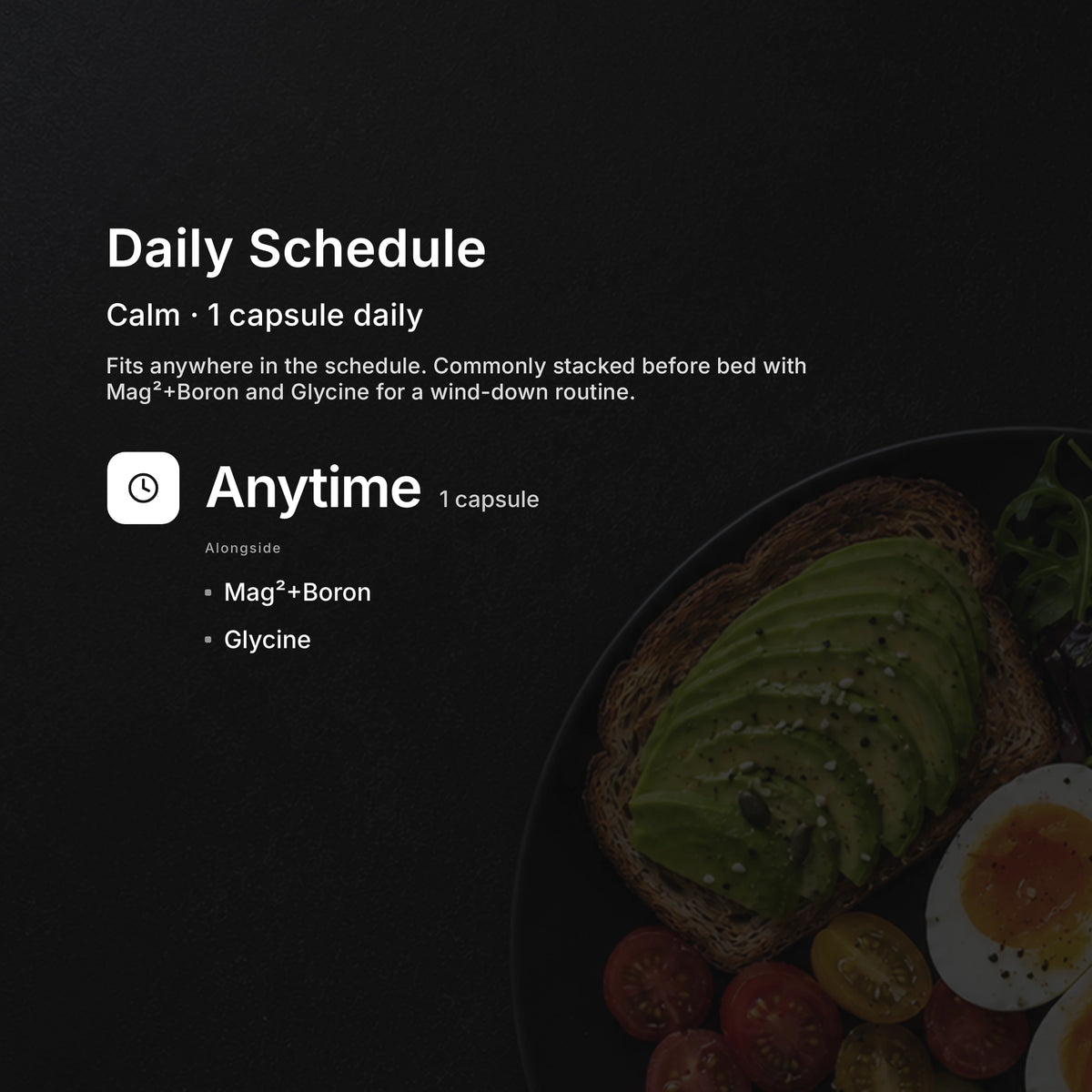
In the Marek daily schedule, Calm sits under "anytime" rather than tied to a specific meal or time of day. Some practical stacking notes:

  • Morning capsule meal (Daily D3/K2, Methylate, Thyroid Support, P5P+, Berberine⁵) — Calm can be added here if you want morning support.
  • Mag² + Boron and Marek Glycine are the dedicated evening products; Calm can complement these for an evening wind-down or be used earlier in the day instead.

If you're already taking other mood, sleep, or stress-related supplements (5-HTP, ashwagandha, and so on), review with a healthcare provider before stacking, since some combinations can amplify effects in ways that aren't always desirable.

Who should consult a healthcare provider before taking Calm?

Consult your healthcare provider before starting Calm if you:

  • Take SSRIs, SNRIs, MAOIs, or other antidepressant or anti-anxiety medications. Saffron has been studied in mood-related contexts, and combining it with prescription mood medications may amplify effects in ways that should be monitored.
  • Take blood pressure medications. Rhodiola can affect blood pressure in some people.
  • Have a diagnosed psychiatric condition (depression, anxiety disorders, bipolar disorder, OCD, and similar) under active management.
  • Are pregnant, nursing, or trying to conceive. Saffron is generally avoided in pregnancy at supplemental doses, and the safety profile of the full formula hasn't been established for pregnancy.
  • Take immunosuppressants, anticoagulants, or sedative medications.
  • Have a known sensitivity to adaptogens.

Calm is a dietary supplement and is not intended to diagnose, treat, cure, or prevent any disease. If you're managing a condition or under medical supervision, work with your provider to determine whether Calm fits your protocol.

How long does shipping take?

We ship fast — orders go out within 1 business day. From there:

  • Standard (3–7 business days): Free on orders over $99 within contiguous U.S.
  • Expedited (2–3 business days): Available at checkout

You'll receive tracking info by email as soon as your order ships.

Do you ship internationally?

We currently ship within the U.S. only.
International shipping is coming — sign up for our newsletter and we'll let you know when it's available.

Are your supplements third-party tested?

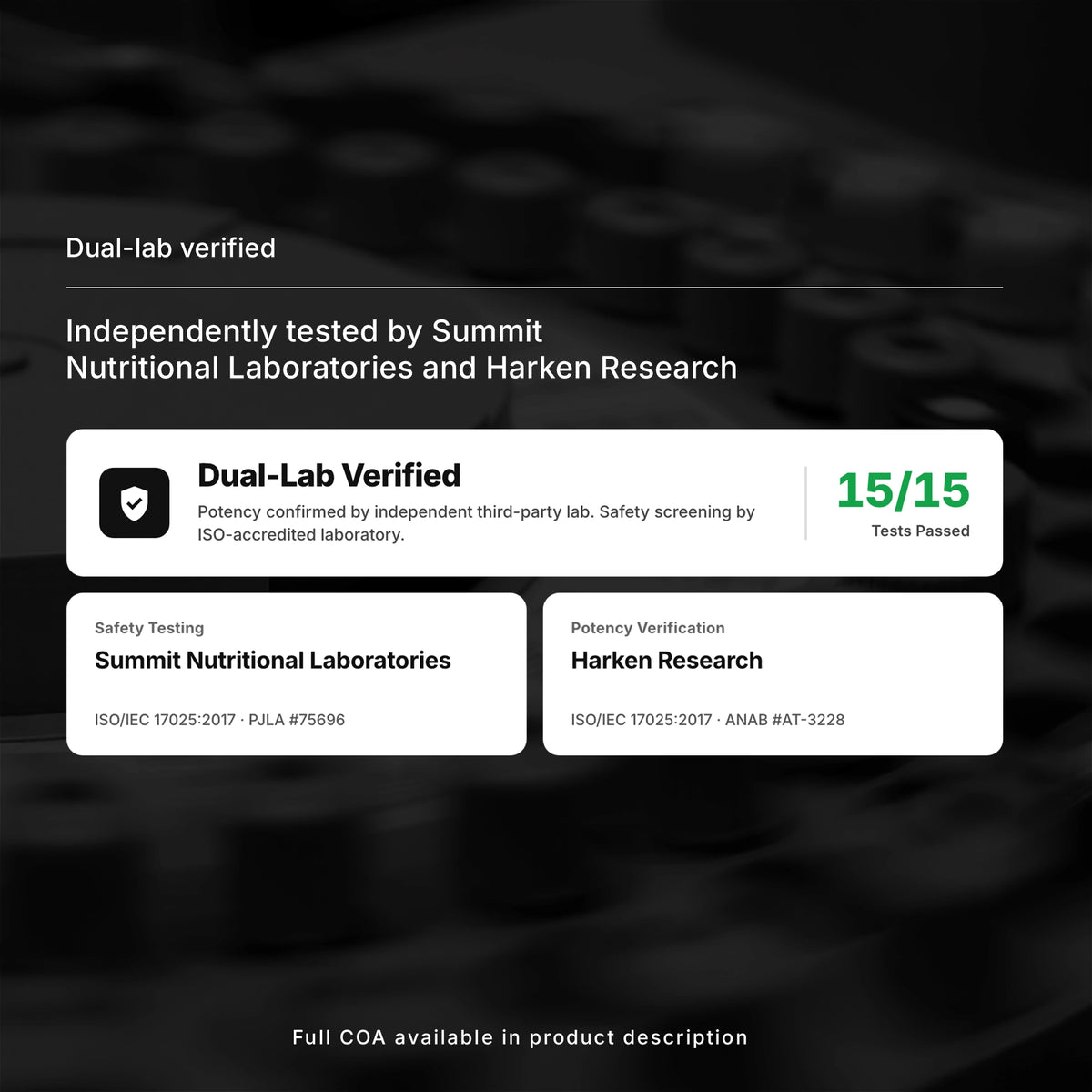
Every single batch of Marek Supplements is manufactured in a cGMP-compliant, NSF/ANSI 455-2 certified U.S. facility, with globally sourced ingredients tested by two ISO-accredited laboratories for identity, potency, heavy metals, microbial contaminants, and allergens. Because what's on the label should be what's in the bottle — and nothing else.

Do you offer subscriptions?

Absolutely. Choose Subscribe & Save at checkout and we'll ship every 90 days — you'll save 10% on every order, and you can pause, skip, or cancel whenever you like.

Are your supplements non-GMO and gluten-free?

Yes. All Marek Supplements are non-GMO and gluten-free (verified by third-party lab testing), with no artificial dyes or preservatives.

Didn’t find your answer?

Don't hestitate to contact us

MAREK SUPPLEMENTS

Daily schedule

Capsule Powder

Morning

Before eating

FASTED

Glutamine

$30/90-days

5g in water

Breakfast

With food containing fat

WITH MEAL

Methylate

$70/90-days

2 capsules

Thyroid Support

$75/90-days

1 capsule

P5P+

$70/90-days

1 capsule

Daily D3/K2

$50/90-days

1 capsule

Berberine5 (dose 1/2)

$75/90-days

1 capsule · with carbs

Lunch

Midday, with food

WITH MEAL

Liver Support

$125/90-days

2 capsules

Berberine5 (dose 2/2)

$75/90-days

1 capsule · with carbs

Anytime

Flexible timing

FLEXIBLE

Calm

$75/90-days

1 capsule · non-sedating, day or night

Creatine

$30/90-days

5g in water · consistency > timing

Before Bed

30-60 min before sleep

WIND DOWN

Mag2+ Boron

$70/90-days

4 capsules

Glycine

$30/90-days

5g in water or chamomile tea

Berberine5: Take each capsule with your two largest carb-containing meals of the day.

These statements have not been evaluated by the Food and Drug Administration. Dosing guidance is educational only and not a substitute for medical advice. Consult your healthcare provider before starting any new protocol.