
FAQs

Please read our FAQs page to find out more.

What is Marek Creatine designed to support?

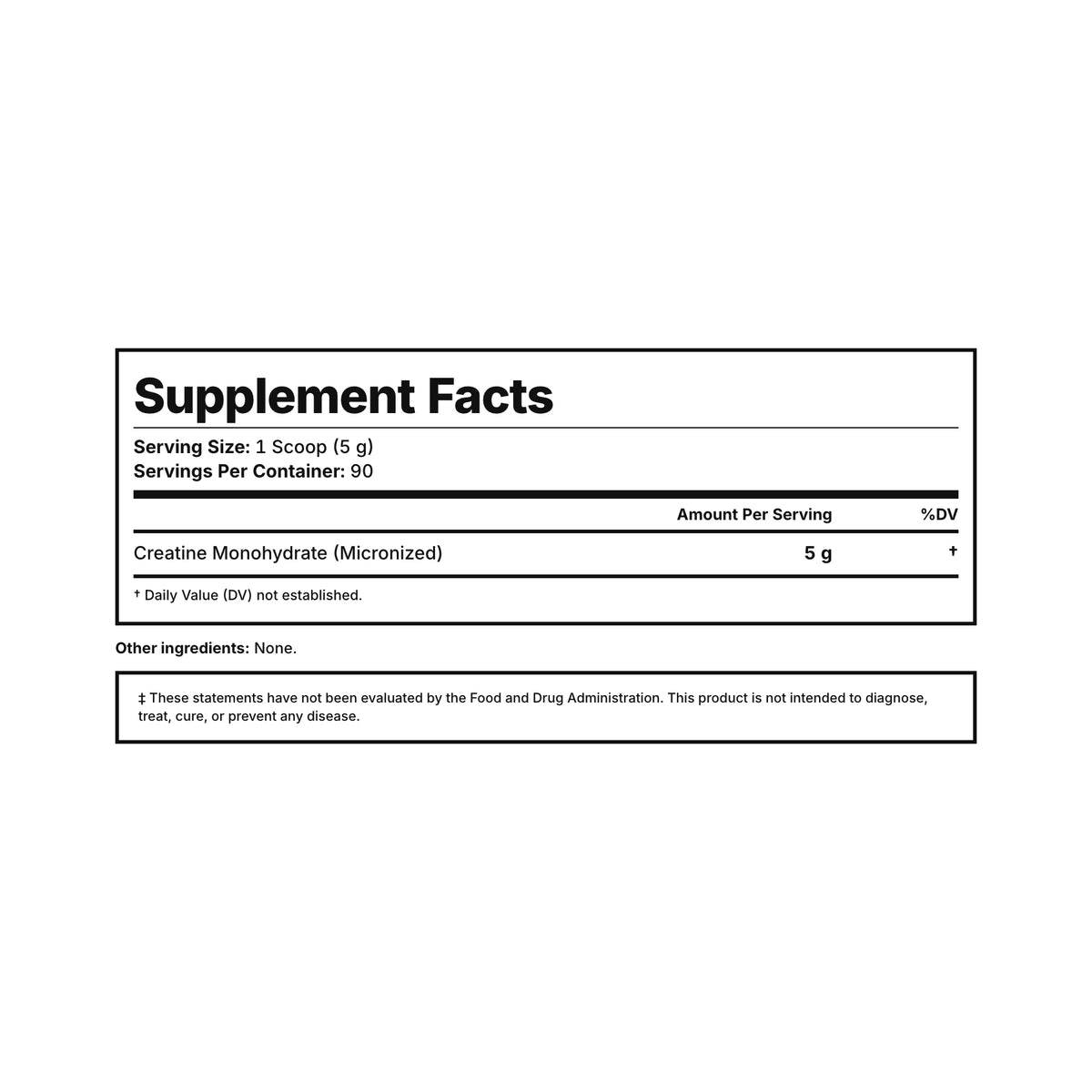
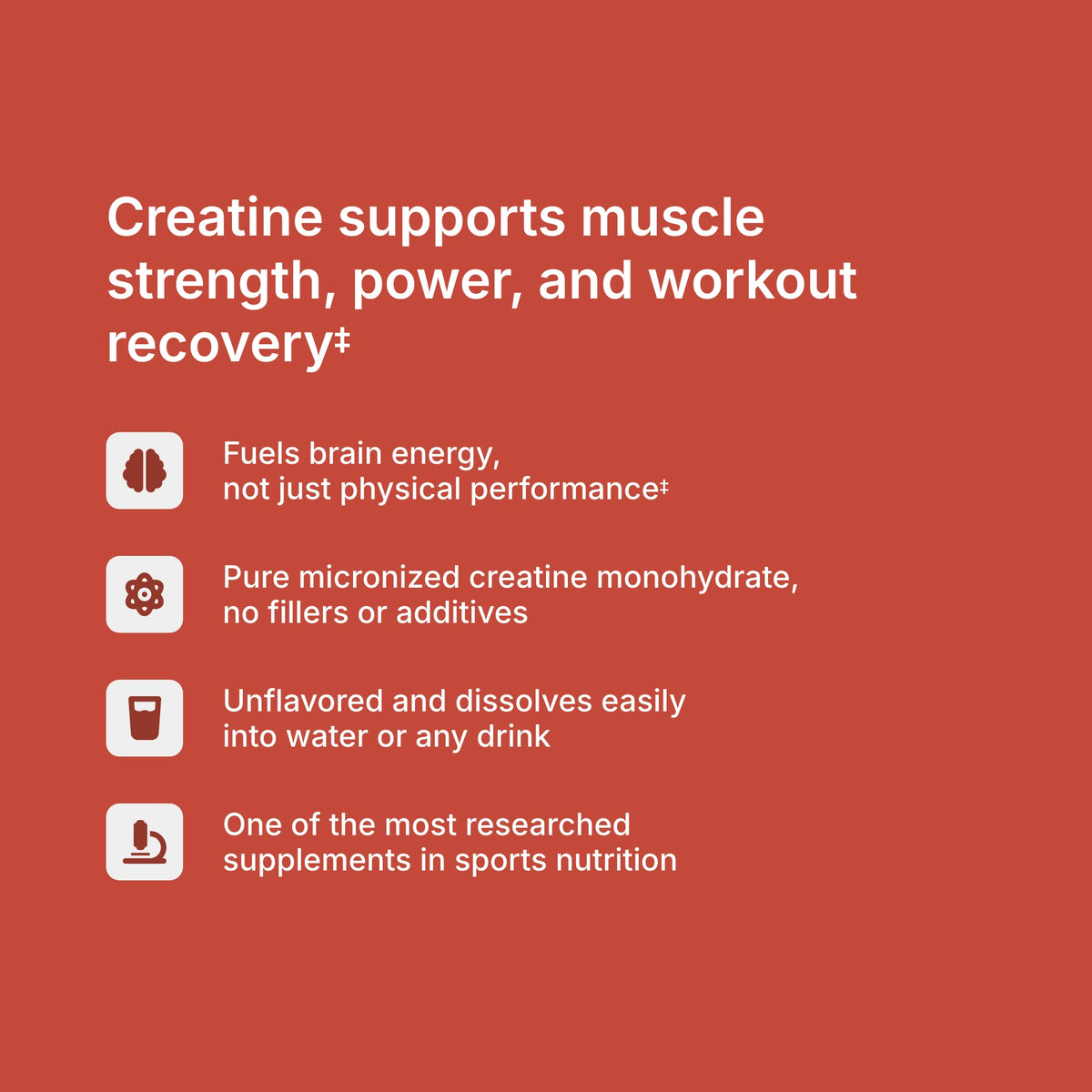
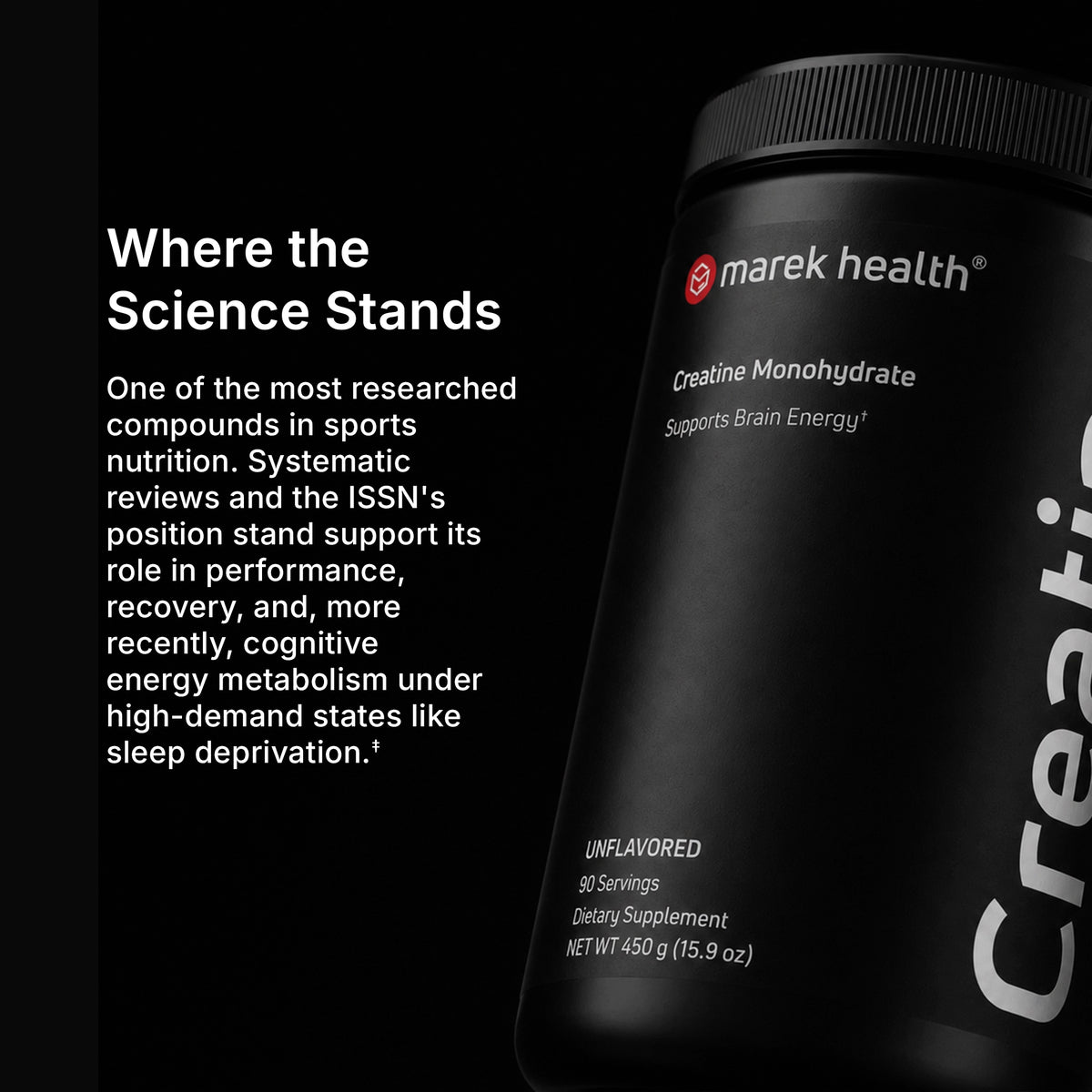
Marek Creatine is pure, micronized creatine monohydrate at 5 grams per serving. It supports brain energy, muscle performance, strength, recovery, and cellular energy metabolism — all through the same underlying mechanism: replenishing the body's phosphocreatine reserves, the rapid energy system used by muscles and the brain during periods of high demand.‡

It's positioned for everyone who lives in a body and uses a brain, not just lifters and athletes.

The cognitive applications — processing speed, focus under fatigue, mental performance during sleep loss — are among the most interesting recent additions to the creatine literature.‡

The performance applications — strength, power output, increased lean body mass, and faster recovery between high-intensity efforts — are the most thoroughly documented benefits of any supplement on the market, with hundreds of randomized trials going back to the early 1990s.‡

Reference: ISSN Position Stand on creatine safety and efficacy (Kreider et al., 2017) — https://pubmed.ncbi.nlm.nih.gov/28615996/

How does creatine support muscle performance and recovery?

Skeletal muscle relies heavily on the phosphocreatine system for short, intense efforts — the first 10 to 30 seconds of all-out work, repeated sets, jumps, sprints, or lifts. Creatine supplementation increases muscle phosphocreatine stores, which extends how long that system can deliver maximal output before fatigue sets in.‡

This is the most thoroughly documented effect in supplement science. The 2017 ISSN position stand — the official statement of the International Society of Sports Nutrition — concluded that creatine monohydrate is the most effective ergogenic supplement currently available for increasing high-intensity exercise capacity and lean body mass during training.‡

Practically, that translates into more productive training over time: more total work performed per session, faster recovery between sets, and gradually accumulated strength and lean mass gains when paired with consistent training.‡

Reference: Kreider et al., J Int Soc Sports Nutr, 2017 — https://pubmed.ncbi.nlm.nih.gov/28615996/

Why creatine monohydrate?

Because every other form of creatine is solving for a problem creatine monohydrate doesn't actually have.

Creatine monohydrate is the form used in the overwhelming majority of clinical trials — hundreds of studies spanning decades, in athletes, recreational users, older adults, vegetarians, and clinical populations. It's affordable, stable, well-absorbed, and effective. The alternatives — creatine HCl, creatine ethyl ester, buffered creatine ("Kre-Alkalyn"), creatine nitrate, creatine magnesium chelate — are typically marketed on claims of better absorption, less bloating, or no need for loading. When compared head-to-head with monohydrate, none of them have shown meaningfully better outcomes for muscle creatine saturation or performance.‡

Marek Creatine uses pure micronized creatine monohydrate. Micronization refers to particle size — the Creatine Monohydrate powder is processed into a finer grind, which improves how cleanly it dissolves in water and how smoothly it goes down. It doesn't change the molecule itself.

Why 5 grams per serving — and do I need to load or cycle?

Five grams is the standard daily maintenance dose used across most of the creatine research literature. It's enough to saturate muscle creatine stores over the course of about three to four weeks of consistent use, and to maintain that saturation indefinitely thereafter.‡

You can shorten the saturation timeline by loading — typically 20 g/day split into four doses for the first 5 to 7 days — but loading isn't required, and the end state (full muscle saturation) is the same whether you load or take 5 g daily from day one. The trade-off is how soon you reach it. Loading sometimes causes mild GI discomfort or water-weight gain.

Cycling is also not required. Creatine isn't a hormone, isn't habit-forming, doesn't down-regulate any pathway with continued use, and doesn't need a "washout" period. Daily continuous use is the protocol most of the research is built on.‡

The simple rule: 5 g every day, with no need to time it perfectly, load it, or take breaks.

When and how should I take Marek Creatine?

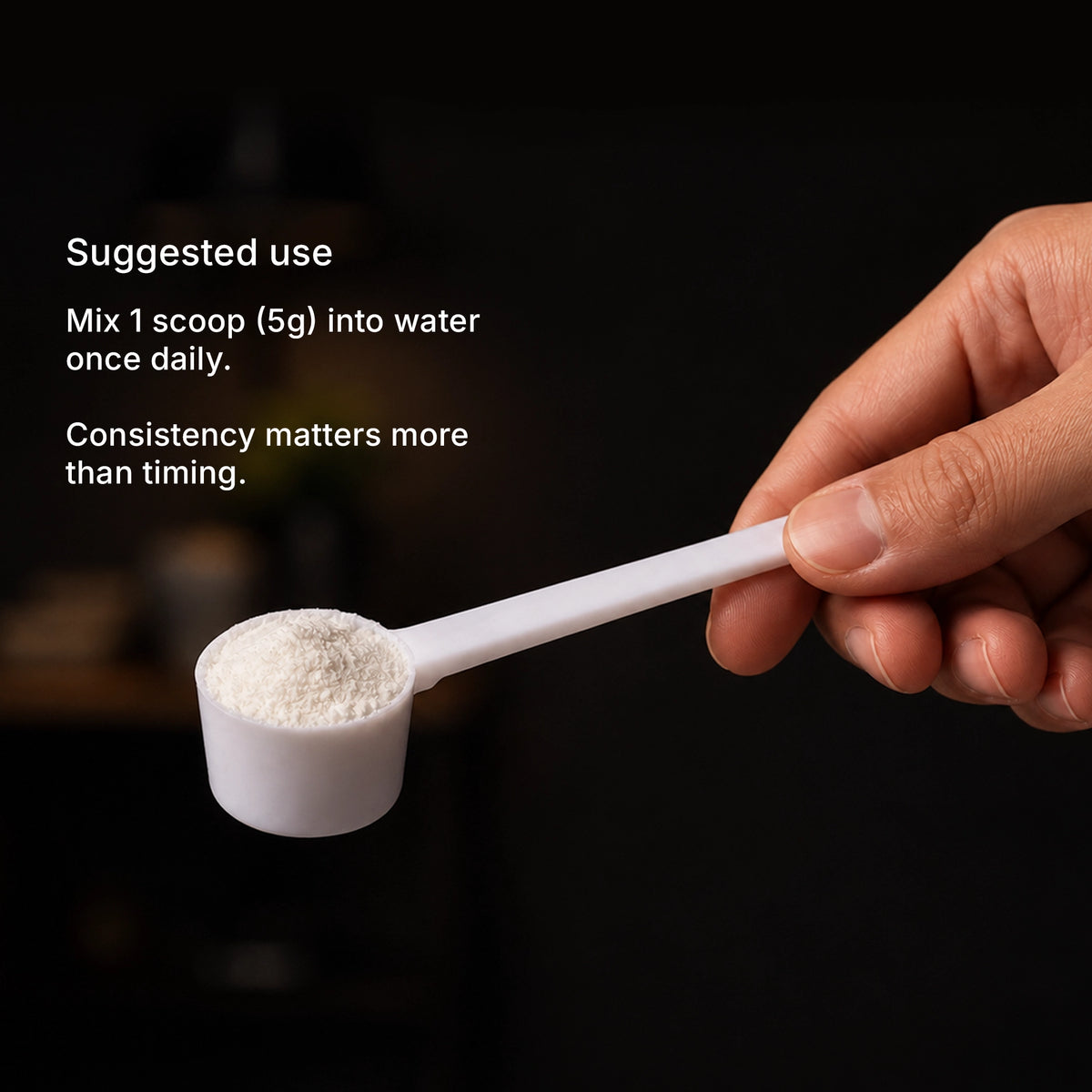
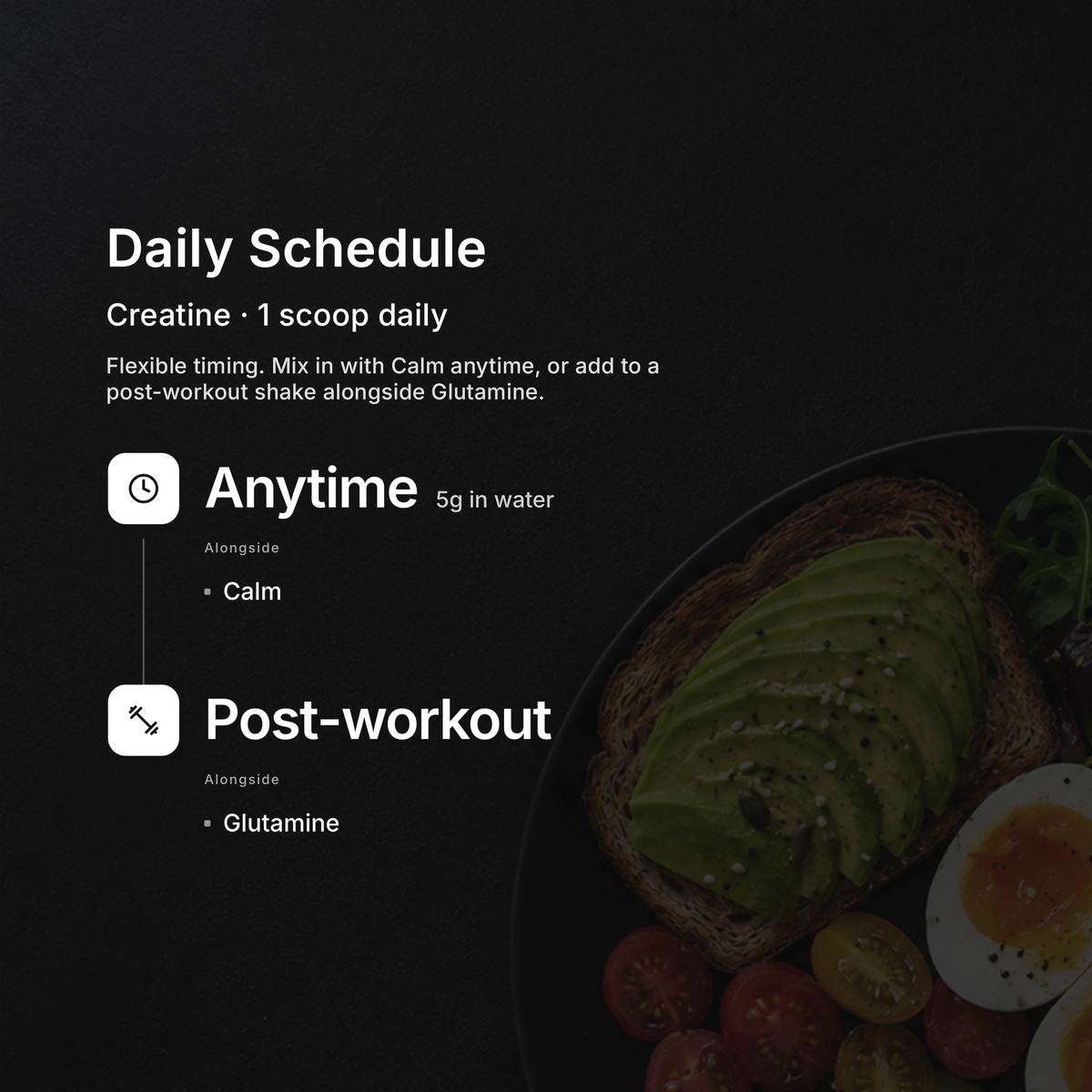
Mix one scoop (5 g) into water once daily. Timing is not critical — the goal is saturation over time, not an acute pre- or post- workout effect.‡

A few practical notes:

  • Most people take it with breakfast, before training, after training, or just mixed into a daily routine drink. Pick whatever you'll actually do every day. Consistency matters far more than perfect timing.
  • It mixes cleanly with water, coffee, electrolytes, juice, or a smoothie. Some settling at the bottom is normal — stir again before finishing.
  • It's unflavored and unsweetened, so it doesn't change the taste of whatever you mix it into.
  • A glass of plain water afterward is a reasonable habit. Creatine pulls a small amount of water intracellularly into muscle cells, so total daily hydration matters; acute timing of water intake doesn't.
Does creatine cause hair loss?

The current evidence doesn't support that claim.‡

The concern traces back to a single 2009 study of 20 college rugby players, in which three weeks of creatine was associated with a rise in the DHT-to-testosterone ratio. Two caveats are almost always missing from the headline: the study didn't actually measure hair — only a hormone ratio — and the finding hasn't been replicated in the 15+ years since.

In April 2025, the first randomized controlled trial designed to directly answer this question was published in the Journal of the International Society of Sports Nutrition. Forty-five resistance-trained men (18–40) took either 5 g/day of creatine monohydrate or placebo for 12 weeks. The researchers measured a full hormone panel — total testosterone, free testosterone, DHT, and the DHT-to-testosterone ratio — plus objective hair follicle outcomes: density, follicular unit count, and cumulative hair thickness, using the Trichogram test and FotoFinder imaging at baseline and end-of-study.‡

There were no significant differences in DHT levels, the DHT-to-testosterone ratio, or any hair-growth parameter between the creatine and placebo groups. The authors concluded the trial provides strong evidence against the claim that creatine contributes to hair loss.‡

A separate 2025 ISSN review of common creatine misconceptions reached the same conclusion: across 12+ studies measuring creatine's effect on androgen hormones, no significant changes have been observed.‡

References:

Does creatine cause bloating, water retention, or weight gain?

Sometimes, but the reasons usually aren't what people think.

Some people notice 1–2 lbs of weight gain in the first week or two of creatine use, particularly with loading protocols. That's intracellular water — creatine pulls water into muscle cells, where it belongs, not subcutaneous bloating under the skin. It tends to stabilize within 2–4 weeks and reflects fuller, more hydrated muscle tissue rather than fluid puffiness.‡

GI discomfort (mild bloating, stomach upset) is more likely with high acute doses — the 20 g loading protocol taken all at once is the usual culprit — and is uncommon at the standard 5 g daily dose. Marek Creatine is micronized to improve mixability, which may help to improve GI tolerance.‡

Body fat does not increase from creatine use. Long-term weight changes from creatine are driven primarily by increased lean mass — the same training response that creatine helps support.‡

If you're particularly sensitive: avoid loading protocols, take with food, drink plenty of water, and split the dose throughout the day.

Is creatine safe for kidneys?

For healthy adults, the available evidence says yes.

The myth comes from a real but misinterpreted observation. Creatine breaks down into creatinine, which is the standard marker used in blood tests to estimate kidney function. People who supplement with creatine often have higher serum creatinine readings, and at first glance that can look like a sign of kidney stress. It isn't — it's just extra dietary creatine being metabolized and showing up in the assay. Cystatin C, an alternative kidney function marker that isn't influenced by creatine intake, doesn't change with supplementation.‡

The 2017 ISSN position stand reviewed decades of safety data, including long-term studies up to 5 years of continuous use, and concluded that creatine monohydrate does not adversely affect renal function in healthy individuals at standard doses (3–5 g/day).‡

The caveat: if you already have kidney disease, reduced renal function, or take medications that affect renal handling, the calculus is different. Talk to your healthcare provider before starting creatine in that situation.

If you get a routine lab and your creatinine reading comes back slightly elevated, mention to your doctor that you supplement with creatine. They may want to use a different marker — like cystatin C, eGFR-Cystatin, or SDMA — to assess actual kidney function.

Reference: Kreider et al., J Int Soc Sports Nutr, 2017 — https://pubmed.ncbi.nlm.nih.gov/28615996/

Can I take Marek Creatine alongside other Marek supplements?

Yes. Marek Creatine pairs cleanly with the rest of the modular formulary.

If you train, taking creatine with a post-workout meal is a reasonable choice but not necessary — the saturation effect comes from total daily intake over weeks, not single-dose timing.

Who should consult a healthcare provider before taking Marek Creatine?

Consult your healthcare provider before starting Marek Creatine if you:

  • Have kidney disease, reduced renal function, or any condition affecting renal handling.
  • Have liver disease or are under treatment for hepatic conditions.
  • Take medications metabolized through pathways that interact with creatine handling, including diuretics, regular NSAID use, or other nephrotoxic drugs.
  • Are pregnant, nursing, or trying to conceive.
  • Have a history of bipolar disorder or take lithium — creatine has been investigated in mood contexts and dose considerations may matter.
  • Are under 18.

Marek Creatine is a dietary supplement and is not intended to diagnose, treat, cure, or prevent any disease. If you're managing a condition or under medical supervision, work with your provider to determine whether creatine fits your protocol.

How long does shipping take?

We ship fast — orders go out within 1 business day. From there:

  • Standard (3–7 business days): Free on orders over $99 within contiguous U.S.
  • Expedited (2–3 business days): Available at checkout

You'll receive tracking info by email as soon as your order ships.

Do you ship internationally?

We currently ship within the U.S. only.
International shipping is coming — sign up for our newsletter and we'll let you know when it's available.

Are your supplements third-party tested?

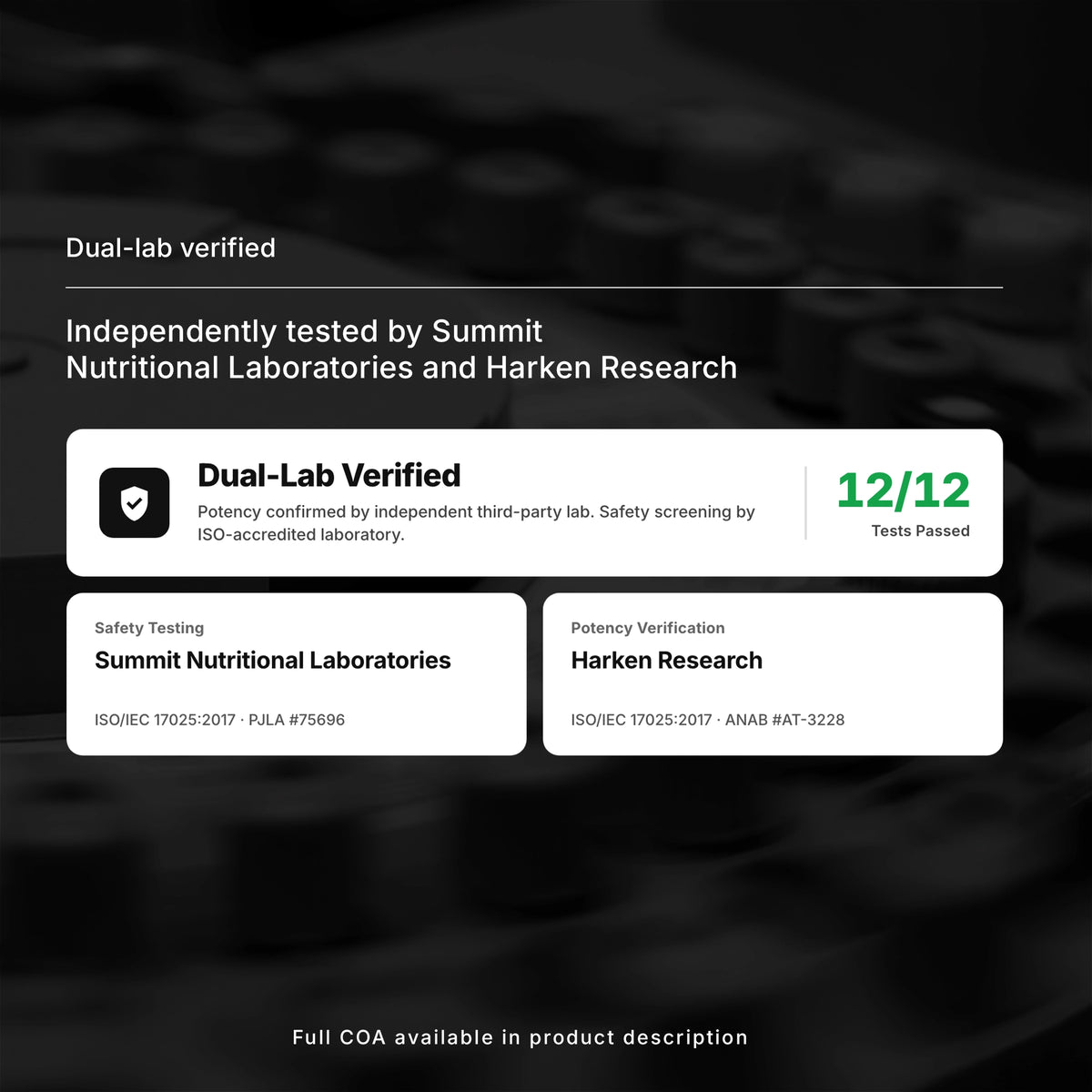
Every single batch of Marek Supplements is manufactured in a cGMP-compliant, NSF/ANSI 455-2 certified U.S. facility, with globally sourced ingredients tested by two ISO-accredited laboratories for identity, potency, heavy metals, microbial contaminants, and allergens. Because what's on the label should be what's in the bottle — and nothing else.

Do you offer subscriptions?

Absolutely. Choose Subscribe & Save at checkout and we'll ship every 90 days — you'll save 10% on every order, and you can pause, skip, or cancel whenever you like.

Are your supplements non-GMO and gluten-free?

Yes. All Marek Supplements are non-GMO and gluten-free (verified by third-party lab testing), with no artificial dyes or preservatives.

Didn’t find your answer?

Don't hestitate to contact us

MAREK SUPPLEMENTS

Daily schedule

Capsule Powder

Morning

Before eating

FASTED

Glutamine

$30/90-days

5g in water

Breakfast

With food containing fat

WITH MEAL

Methylate

$70/90-days

2 capsules

Thyroid Support

$75/90-days

1 capsule

P5P+

$70/90-days

1 capsule

Daily D3/K2

$50/90-days

1 capsule

Berberine5 (dose 1/2)

$75/90-days

1 capsule · with carbs

Lunch

Midday, with food

WITH MEAL

Liver Support

$125/90-days

2 capsules

Berberine5 (dose 2/2)

$75/90-days

1 capsule · with carbs

Anytime

Flexible timing

FLEXIBLE

Calm

$75/90-days

1 capsule · non-sedating, day or night

Creatine

$30/90-days

5g in water · consistency > timing

Before Bed

30-60 min before sleep

WIND DOWN

Mag2+ Boron

$70/90-days

4 capsules

Glycine

$30/90-days

5g in water or chamomile tea

Berberine5: Take each capsule with your two largest carb-containing meals of the day.

These statements have not been evaluated by the Food and Drug Administration. Dosing guidance is educational only and not a substitute for medical advice. Consult your healthcare provider before starting any new protocol.